
National Government of South Korea
#11707 · South Korea
#0168 · national
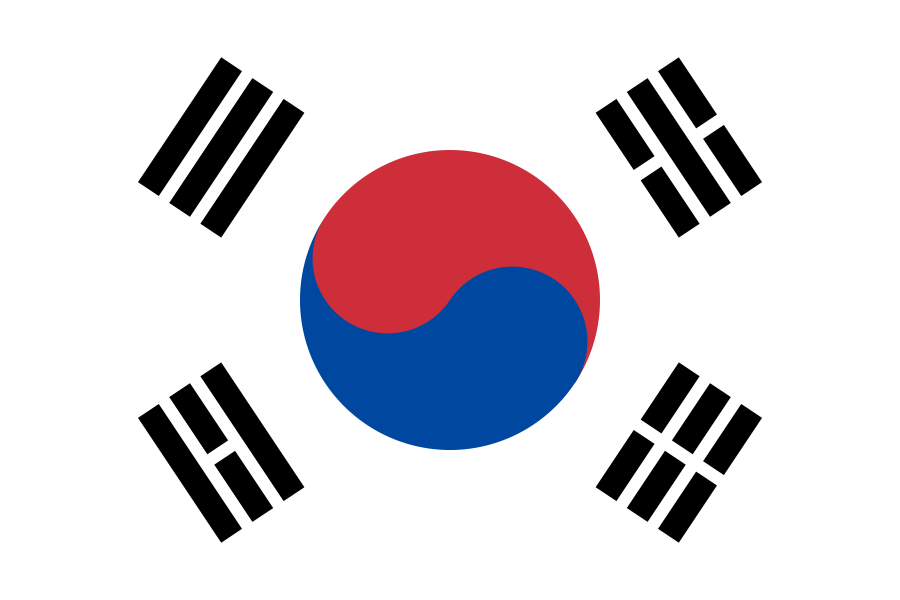
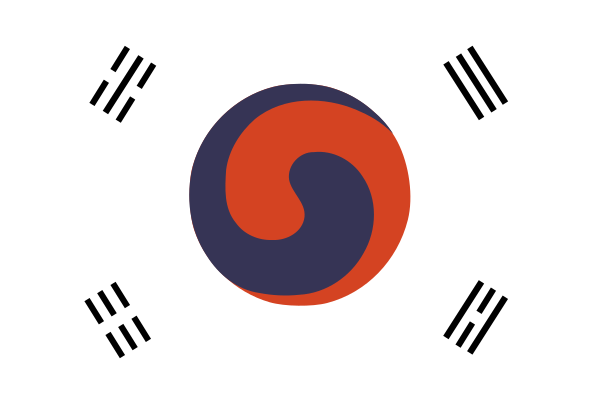
The flag of South Korea features a white field with a central red-and-blue taegeuk and four black trigrams placed around it.
The national flag of South Korea is called the Taegeukgi. Its white field signifies peace, purity, and a traditional Korean aesthetic. The central red-and-blue taegeuk represents the complementary cosmic forces of yang and eum in balanced unity, and the four black trigrams derive from the I Ching and symbolize movement, harmony, and the classical elements of heaven, fire, water, and earth. The taegeuk symbol has been used in Korea since at least the Goguryeo era, appeared on a Joseon naval ensign in 1856, and the national flag was adopted in 1882–1883 under King Gojong. The design was later standardized after the founding of the Republic of Korea in 1948, including official construction guidelines issued in 1949.
Taegeukgi design first used
The four-trigram Taegeukgi design was in use by 1882, and Pak Yeong-hyo first used the flag that year.
Joseon officially adopts the flag
The Joseon government officially promulgated the Taegeukgi as the national flag.
Provisional government readopts flag
The Korean Provisional Government in exile adopted the Taegeukgi during Japanese rule.
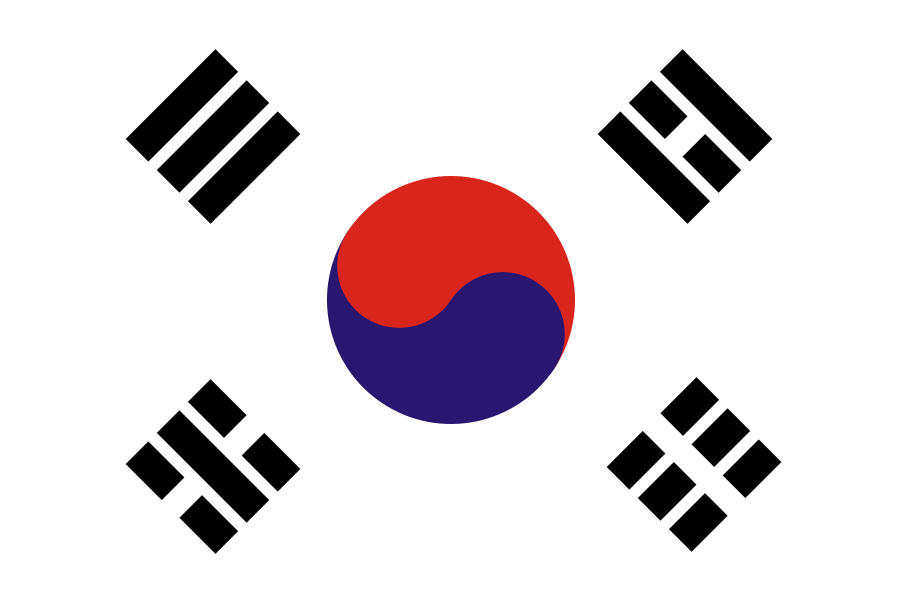
USAMGIK uses the Taegeukgi
The U.S. Army Military Government in Korea began using the Taegeukgi alongside the U.S. flag.
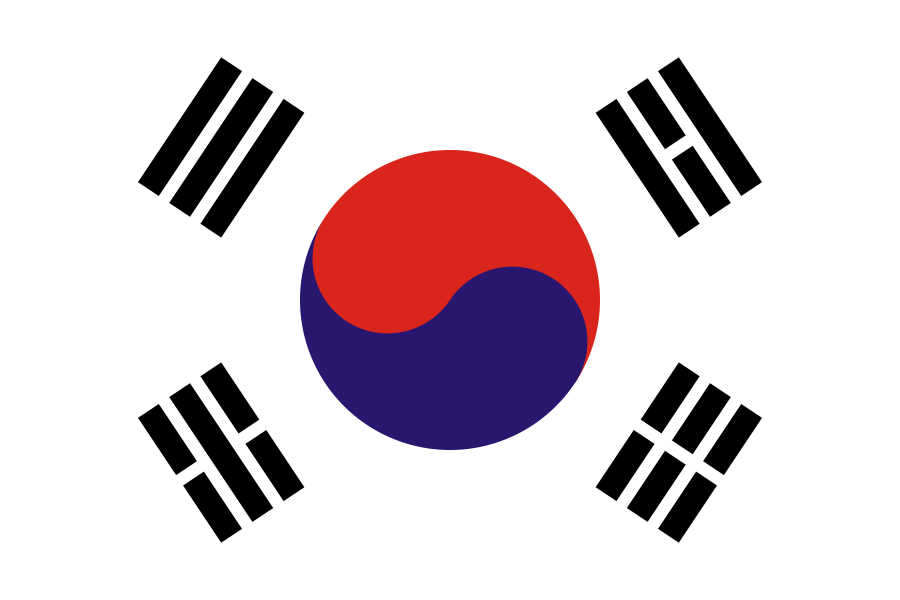
Adopted as South Korea’s flag
The Constituent National Assembly adopted the Taegeukgi as the national flag of South Korea.
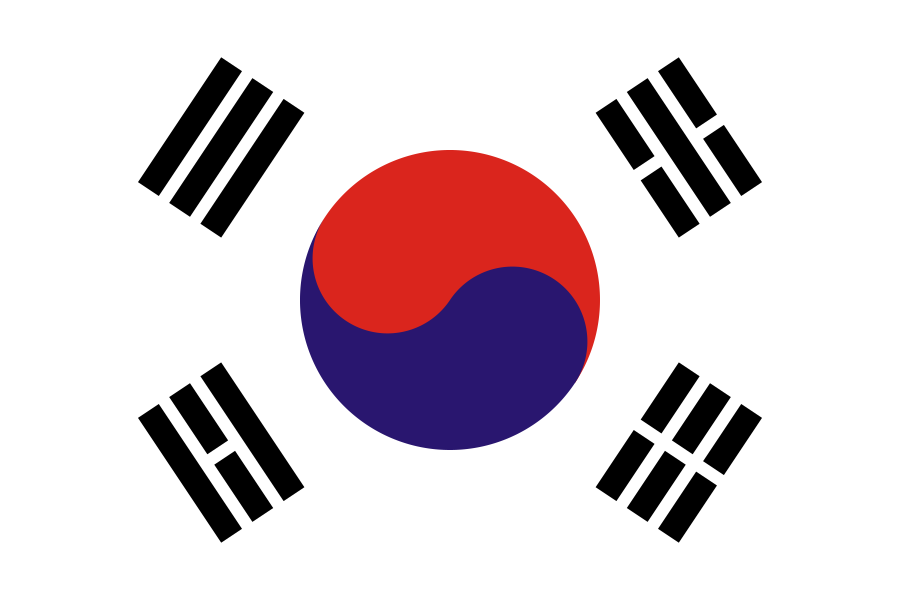
Flag geometry standardized
The National Flag Correction Committee standardized the design, and the government announced the production law on October 15.
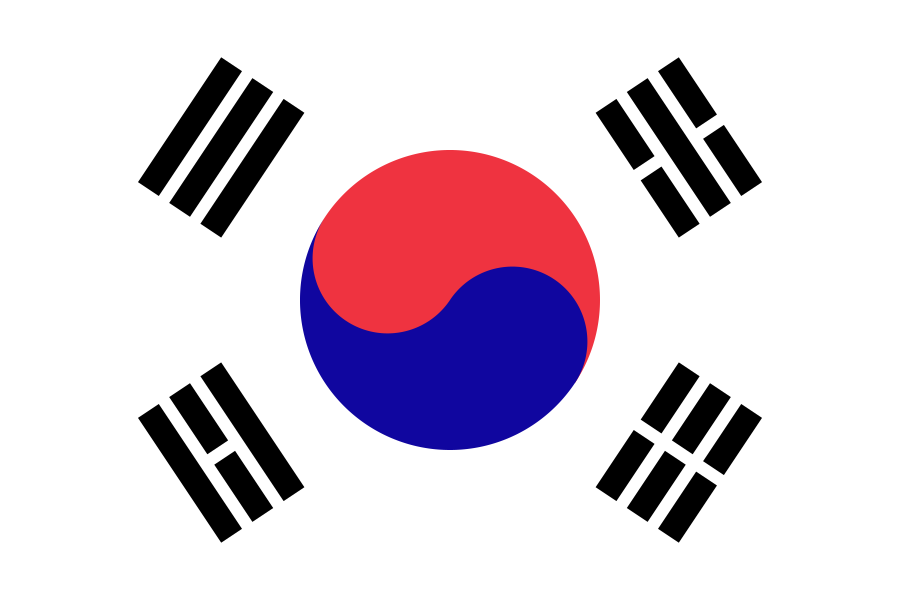
Flag layout specifications changed
New regulations codified exact dimensions and slightly changed the flag’s layout.
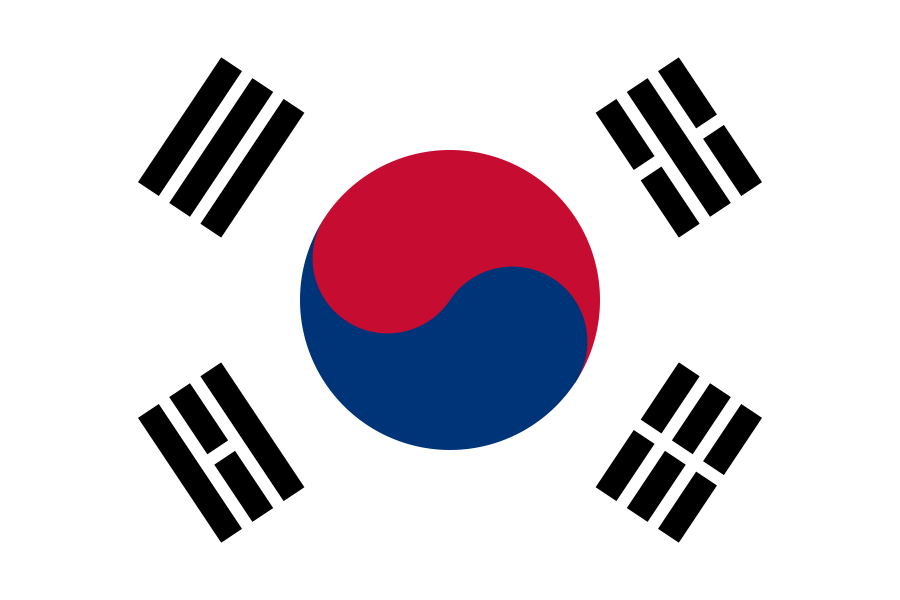
Colors officially specified
A presidential decree set precise color specifications for the flag for the first time.
Color specifications revised
The government re-specified the flag’s colors; its basic design remained unchanged.
#11707 · South Korea
#0290 · South Korean
#2197
#14674 · text
#14700 · fictional
#14729 · fictional
#9767 · South Korea
#12944 · Vietnam